Tuesday, August 21, 2012

"Sunday Bloody Sunday" - U2


Driven by a ferocious martial drumbeat and a hauntingly universal refrain -- "I can't believe the news today / I can't close my eyes and make it go away" -- "Sunday Bloody Sunday" is one of U2's imperishable anthems. Like another song on this list, The Cranberries' "Zombie", it's inspired by the Irish Troubles: "Bloody Sunday" references the British massacre of 14 demonstrators in Derry on January 30, 1972. But like "Zombie," it also rejects the terrorism of the Irish Republic Army (IRA). The lyrics anyway are general and allusive, and the song has proved readily adaptable in U2 concerts over the years, as a call to resist battle calls and bear aloft a standard of peace.

Like many of U2's great anthems -- think of "I Still Haven't Found What I'm Looking For" on this list, or "One" -- "Sunday Bloody Sunday" has a clear spiritual dimension. It's implicit in the title, but only becomes explicit at the end: "The real battle just begun to claim the victory Jesus won / On Sunday, bloody Sunday ..." Secular progressives may want to snip the entire last verse, which includes those lines, and concentrate on the song's epic essence:

I can't believe the news today
Oh, I can't close my eyes 
And make it go away
How long...
How long must we sing this song
How long, how long ...
'Cause tonight ... we can be as one
Tonight ...

Broken bottles under children's feet
Bodies strewn across the dead end street
But I won't heed the battle call
It puts my back up
Puts my back up against the wall

Sunday, bloody Sunday

And the battle's just begun
There's many lost, but tell me who has won
The trench is dug within our hearts
And mothers, children, brothers, sisters 
Torn apart

Sunday, bloody Sunday
Sunday, bloody Sunday ...

Here's the original version of "Sunday Bloody Sunday," leading off U2's breakthrough third album, 1983's War:

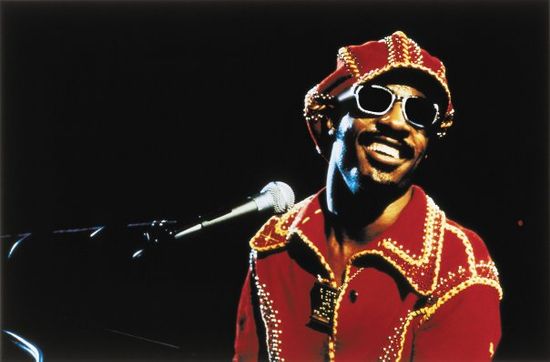
"Love's in Need of Love Today" - Stevie Wonder


The first words are "Good morn," but they might as well be "Good mourn." This is one of Stevie Wonder's most mournful, slow-building, and hypnotic tunes, beginning with dirgey a cappella choral riffs, and continuing through Stevie's lovelorn lament for a world possessed by hate.

The leadoff cut for Stevie's monumental musical feast, the double-album-plus Songs in the Key of Life (1976), "Love's in Need of Love Today" seems to last forever. It's actually only a little over seven minutes long. But while the opening bars, and the excursions in the latter half of the song, offer clues as to how vocal jams and improvisations might be crafted, the heart of the lyrics and melody is fairly compact:

Good morn or evening friends 
Here's your friendly announcer 
I have serious news to pass on to everybody 
What I'm about to say 
Could mean the world's disaster 
Could change your joy and laughter to tears and pain 

It's that 
Love's in need of love today 
Don't delay 
Send yours in right away 
Hate's goin' round 
Breaking many hearts 
Stop it please 
Before it's gone too far 

The force of evil plans 
To make you its possession 
And it will if we let it 
Destroy everybody 
We all must take 
Precautionary measures 
If love and please you treasure 
Then you'll hear me when I say 

Oh that 
Love's in need of love today 
love's in need of love today 
Don't delay 
don't delay 
Send yours in right away ...

It's a great all-purpose anthem, uplifting but cautionary, urgent but reflective. Basically, it's made for any evening scene illuminated by candlelight. But it would also be a motivating first-thing-in-the-morning tune for sleepy activists: "Love's in need of love today / Don't delay ...", now brush your teeth and go out and fix things.

Monday, February 13, 2012

"Into the Fire" - Bruce Springsteen

Guest blog by David Simon
Yale University

[Note: I'm pleased to inaugurate this new section of "Anthems for a New Generation," with David Simon's in-depth contribution. Visitors who would like to guest-blog an anthem are invited to contact me about their song choice. This could be a very constructive addition to the site, so thanks to David for prompting it with his fine essay!]

Bruce Springsteen is at once an obvious choice and a too obvious choice to contribute a song to this list of anthems. "Thunder Road", "Born to Run", and "Hungry Heart" are anthemic to their core. "Glory Days" ought to be the official anthem of the onset of middle age. And while "Born in the U.S.A." is not the patriotic anthem many took it to be, Bruce himself was hard-pressed convince George Will, apparently believed Springsteen would give his blessing to have Ronald Reagan could adopt it as a campaign theme in 1984. And the way that Springsteen belts out "Santa Claus Is Coming to Town" (with more than a little help from the E Street Band), what you get is less of a carol and more of a Christmas anthem.

For me, however, Bruce's single greatest anthemic contribution is "Into the Fire," the second song on his 2002 9/11 response album The Rising. Across the album's 14 songs, Springsteen evokes a spectrum of emotions, each of them specifically identifiable, and most of them searing. (Some of the song titles: "Empty Sky", "You're Missing", "My City of Ruins"). Even "Let's Be Friends (Skin to Skin)" and "The Fuse" manage to evoke a strange, powerful sexual confusion in the wake of the tragedy, deftly identifying the tension between "now more than ever is the time for intimacy, because life is too short and unpredictable to deal with the walls we build" and "I'm too fucked up to handle intimacy." (Line from the latter: "Devil's on the horizon line / Your skin and I'm alive.")

The title song on the album is an anthem unto itself. "The Rising" is a solid "Anthem for a New Generation" candidate in its own right, what with its sing-along "Lie, Lie, Lie, La, La, La, Lie, Lie" chorus, the call-and-response "dream of life" bridge, its swelling melody, and the imagery of a wounded city rising up to greater things (along with the souls of the police and firefighter who died on September 11th).

Yet it is in "Into the Fire" in which Springsteen unleashes the themes of sacrifice and surviving. The song -- and with it, the entire album -- begins with the chilling identification of the subject matter: "The sky was falling and streaked with blood." With a spare, countryish guitar accompaniment, Bruce's voice curls around this line, pained not far below the scratchy surface.

The vocals quickly drift toward a more sorrowful tone, and the lyrics take a turn for the personal: "I heard you calling me, and then you disappeared into the dust / upstairs, into the fire (x2)/ I need your kiss, but love and duty were calling somewhere higher / up the stairs and into the fire."  Not just any stairs, and not metaphorical stairs: up the stairs -- and we all know what he's talking about. (Meanwhile, kudos to Springsteen, surely one of the most masculine men on the planet, for pulling off the presumptive perspective of a working class New York female.)

Friday, February 10, 2012

"Short Memory" - Midnight Oil


A highlight from Midnight Oil's third album, 10-9-8-7-6-5-4-3-2-1 (1982), this is one of rock's most eloquent  protests against imperialism, neo-colonialism, and forgetting. The first two verses consist of little more than a litany of passing references to mass atrocities. But the recitation builds in power as lead singer Peter Garrett reels off the stark syllables -- "Short Memory" perfectly suits his staccato, incantatory vocal style. The second stanza delivers a sardonic broadside against western modernity's homogenizing and deadening nature -- but also against Soviet imperialism (in Afghanistan), an important bit of balance in an otherwise western-focused critique. The overall effect of the song-chant is hypnotic. The chorus and closing call-and-response ("Short memory, must have a ...") is a magnificent self-negation: in singing of historical amnesia, we remember. (See, in a similar vein, the Oils' later classic "Forgotten Years", which only barely misses inclusion in this songbook.)

The Oils' global breakthrough Diesel and Dust (1986) was still several years away, and "Short Memory" never made an international splash as did "Beds Are Burning". But it's just as essential an anthem. The melody is as catchy as anything the group recorded, and the playing throughout is sublime. 10-9-8 ... found the Oils jelling as the greatest rock and roll unit Australia has produced. Jim Moginie's elegiac keyboards mesh beautifully at the outset with the filigreed guitar work of Martin Rotsey, and the two combine again in the jazzy-dissonant instrumental break. Drummer Rob Hirst provides just the right combination of subtlety and crash throughout.

The heart of the song's anthemic appeal is in the first two verses and chorus, and one wouldn't want to miss a word when singing it to the forces of empire:

Conquistador of Mexico, the Zulu and the Navajo
The Belgians in the Congo, short memory
Plantation in Virginia, the Raj in British India
The deadline in South Africa, short memory
The story of El Salvador, the silence of Hiroshima
Destruction of Cambodia, short memory

Short memory, must have a short memory ...

The sight of hotels by the Nile, the designated Hilton style
With running water specially bought, short memory
A smallish man Afghanistan, a watchdog in a nervous land
They're only there to lend a hand, short memory
Wake up in sweat at dead of night
And in the tents new rifles, hey, short memory ...

Thursday, February 9, 2012

"Philadelphia Freedom" - Elton John


At the mid-seventies peak of his career, Elton John -- aided by his American lyricist, Bernie Taupin -- was so prolific that he could deliver a studio album every six or eight months, and still save a stupendous cut like "Philadelphia Freedom" for a stand-alone single. John and Taupin's tribute to Billie Jean King's US tennis team -- and to the spirit of freedom that Philadelphia symbolizes for US patriots -- went straight to the top of the charts in 1975, and became a much-played theme song during the bicentennial summer of 1976. A loving nod to Philly soul, "Philadelphia Freedom" also incarnated its spirit. It's the "blackest" of Elton's hits, and the funkiest.

Progressive activists in the United States often find themselves tarred as "anti-American," with patriotic discourse now largely a right-wing preserve. Moreover, songs evincing a progressive patriotism are always prone to be appropriated and corrupted by the Right -- the fate of Bruce Springsteen's "Born in the USA" under Ronald Reagan being an emblematic example.

For this reason, it's worth seeking out songs that tap the purest patriotic wellspring, and can be directed to a progressive purpose -- as, indeed, Billie Jean King was a powerfully progressive figure in the 1970s, breaking barriers for women and openly LGBT public figures. One suspects that Elton, still in the closet at this time, responded personally to this aspect of the "Philadelphia Freedom" tennis squad, and indeed the song would sound great at a gay-rights rally. But with its rollicking and crowd-pleasing flavor, it's worth pulling out to warm up any demo or sit-in, especially one in an iconic public space or outside a government building.

The lyrics are some of Taupin's best, forsaking his rustic proclivities and literary pretensions for a personable, peppily urban style. John's exuberant vocals, the playing of his crack backing band, and Gene Page's orchestral arrangement -- all lend an indelible punch and swing to what is arguably Elton's crowning moment:

I used to be a rolling stone you know, if a cause was right
I'd leave to find the answer on the road
I used to be a heart beating for someone, but the times have changed
The less I say the more my work gets done

'Cause I live and breathe this Philadelphia freedom
From the day that I was born I've waved the flag
Philadelphia freedom took me knee high to a man
Yeah, gave me peace of mind my daddy never had

Oh, Philadelphia freedom, shine on me and I love you
Shine the light through the eyes of the ones left behind
Shine the light, shine the light, shine the light, won't you shine the light
Philadelphia freedom, I love you, yes I do!

For anthemic purposes, the second verse could perhaps be skipped, the chorus reprised, and the closing call-and-response of "I love, love, love you, yes I do! -- Philadelphia freedom ..." repeated ad infinitum. Just let the Tea Party try to appropriate the language of liberty after that.

Sunday, January 22, 2012

"Rise Up" - The Parachute Club


The funky, joyful "Rise Up," by the Toronto band The Parachute Club, is a little-known early-eighties gem ripe for a revival. As a pro-peace, pro-feminist, pro-LGBT anthem, it's hard to beat -- one of those songs that welcomes everyone to the party. At heart, it's a hymn to diversity and the power of solidarity, easily adaptable to diverse progressive circumstances:

(Rise up rise up)
Oh rise and share your power
(Rise up rise up)
Were dancing into the sun
(Rise up rise up)
It's time for celebration
(Rise up rise up)
Spirit's time has come

We want lovin' we want laughter again
We want heartbeat
We want madness to end
We want dancin'
We want to run in the streets
We want freedom to live in this peace
We want power
We want to make it ok
Want to be singin' at the end of the day
Children to breathe a new life
We want freedom to love who we please